


Olympian Colleen Quigley’s athlete collective is designed to break the sponsorship mold


💪 Strength in numbers
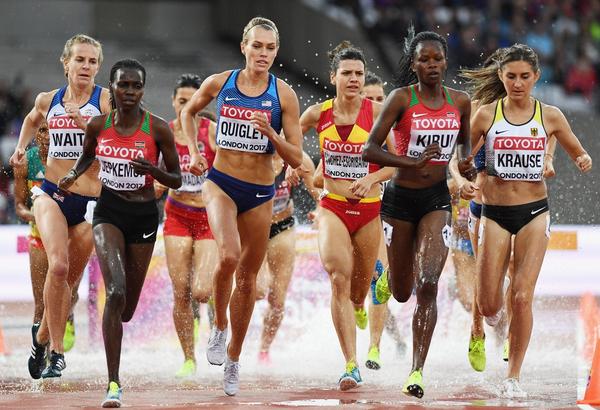
“Track” is an umbrella term for a variety of events, so training is usually individualized. That can make it lonely and expensive. Runners can pool resources by sharing coaches and facilities, but more often, large apparel or shoe brands — Nike, New Balance, and Puma, for example — organize sponsored teams and spend millions to give athletes premier training access.
- Quigley, who represented the U.S. from 2015 to 2019, was part of Nike-supported Bowerman Track Club for six years. “That was really fun,” Quigley remembered. She felt a real connection with her teammates and pride in her team, and in being “a part of something bigger.”
But it comes at a cost. Running for a Nike-sponsored team demands exclusivity, and shoe deals are usually the only ones track athletes get. If things don’t work out with a coach, the runner can’t find a new one — they have to stick with the team’s hire or leave altogether. Athletes have a choice: Take everything a team offers, or none of it, thereby losing out on all support and having to “scratch everything,” Quigley said.
- Quigley felt like the team she wanted “didn’t exist,” since incentives are structured for brands and coaches. If athletes want the training and sponsorships that are right for them, they’re doing it alone, and Olympic training is tough enough without piling on entrepreneurship.
- After the Paris 2024 Olympic cycle, Quigley had enough. “Something has to change, otherwise I'm just going to retire,” she thought. That’s how Meridia was born.
🛣️ Forging her own path

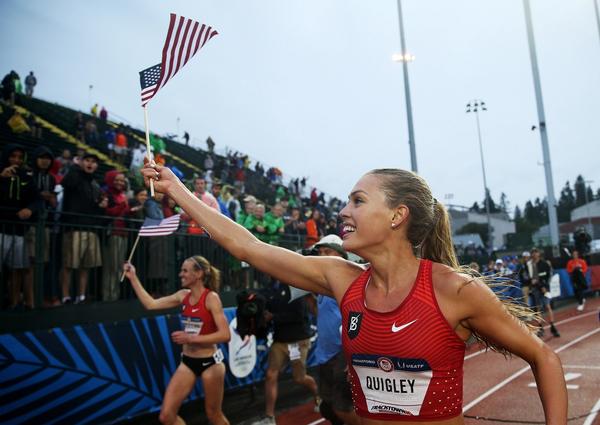
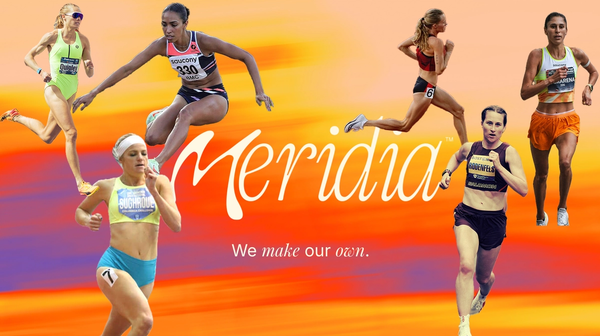
Meridia is a small-scale collective designed for pro track & field women athletes. Quigley describes it as a “really alternative way to have a team,” starting with the fact that each athlete gets to choose their own coach: There’s no head coach at the helm like on brand-owned teams.
- Right now, each of Meridia’s athletes has her own coach. It just “turned out that way,” which uniquely allows Meridia to welcome athletes that run on trails, tracks, and roads.
- Meridia athletes also have different shoe and apparel deals, a freedom they wouldn’t have on another team. Quigley is with Lululemon, and her teammates work with Salomon, Brooks, and Puma.
Meridia is a true collective: Half of each brand deal a Meridia athlete signs goes to the team to pay for shared expenses like content creation, facilities, and other training necessities (the other 50% is distributed amongst the athletes directly for individual expenses).
- Quigley is focused on collective-wide deals, and what they’ve earned so far has been reinvested in successful social media promotion on Instagram and YouTube. In just one year, this has become a selling point in partnerships: Meridia has 5.6K Instagram followers and 5.1K on YouTube
There’s also a benefit to Meridia’s model for smaller brands, which can support and partner with runners — without paying many millions for a whole team. For instance, Quigley is now partnered with Lululemon, which wouldn’t foot the bill for a team under the traditional model, but would happily partner with her as an individual. Quigley says this gives both sides better ROI.
💥 Getting Joggy with it

It takes an open mind from athletes and brands to think creatively about partnerships, especially in atypical categories. Quigley knows how to land big deals — she’s partnered with major running brands like Runna, Superfeet, and Whoop — and she’s bringing that same energy to Meridia.
Earlier this year, Quigley met Ty Haney, the founder of apparel brand Outdoor Voices and a new natural energy drink named Joggy. Both bonded over being women entrepreneurs based in Boulder, Colorado and discussed how Joggy could collaborate with Meridia in a meaningful way.
They decided on a social-driven campaign promoting Joggy at Boulder Boulder, a popular local 10K. There’s a race for the serious professional runners, but another for not-so-serious ones jogging with tequila shots and costumes. The Meridia team ran in their first-ever Boulder Boulder sporting bedazzled Joggy cans, which they “traded” with other runners for treats like hot dogs. Meridia captured everything through Instagram and YouTube content, which Joggy sponsored.
- Quigley liked being able to work with a local, woman-founded company she respects, but it was also a “low-stakes” way the collective could ease into partnerships.
- “A lot of the women on the team have never done partnerships outside of their shoe sponsorship, which is a very different kind of relationship. And so, [we’re] testing out: How does it feel to have deliverables for this brand? We want to make them happy. How do we do that in a way that's fun for us and feels authentic to us?”
Quigley has over 10 years of negotiating brand deals, so she’s informally brokering deals for the collective, and talking to bigger brands for longer partnerships worth more.
- She wants to partner with categories outside sports, too — Quigley dreams of working with brands across beauty, tech, travel, and banking in the lead-up to LA28, and she’s got an encouraging head start so far.
Enjoying this article? Want more?

Sign up for The Call Up and receive sports industry intel straight to your inbox two times a week