What men’s sports can learn from Heated Rivalry


🔥 Hot stuff
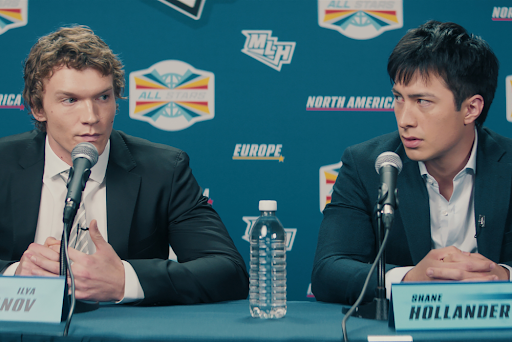
ICYMI, the queer love story framed through a hockey rivalry has become a massive phenomenon averaging 10.6M U.S. viewers per episode, with millions of Canadian viewers returning to rewatch Shane Hollander and Ilya Rozanov’s love story. It’s HBO’s most-watched acquired series ever, and the book that inspired it is currently Canada’s top-selling novel.
As evidence of the show’s popularity with women and queer audiences, take the social media metrics from your favorite women- and queer-focused sports media outlet: The GIST. Over the last 90 days, our social media content referencing Heated Rivalry drove over 16M impressions and an 18% engagement rate, far beyond the industry average.
- Specifically, our post about lead actor Hudson Williams and Canadian prime minister Mark Carney drove 8.6M impressions alone. That’s a lot of eyeballs.
The show is a cultural juggernaut, and brands like Lyft and Tim Horton’s are playing along, while Canada Dry was dragged for missing a buzzworthy marketing opportunity. But most compellingly, IRL men’s sports — especially hockey, which has been infamously inhospitable to queer fans — are hopping on the bandwagon, too.
- Province of Canada is producing the Team Canada fleece worn by Hollander in the show, and the NHL’s Boston Bruins — the inspiration for Ilya Rozanov’s fictional Boston Raiders — have referenced the show with concession offerings and social posts.
- After the show’s debut, StubHub reported ticket interest was 6x higher than average for the Jan. 24th game between the Bruins and the Montréal Canadiens, which inspired Shane Hollander’s fictional team, the Montréal Metros. Across the league, weekly NHL ticket sales on SeatGeek surged 20% after the show first aired.
What’s the benefit of participating in this trend for brands and leagues? It’s a direct line to nontraditional sports fans they’ve been trying to zero in on for years. Heated Rivalry has been a wake-up call for men’s sports and mainstream media on recognizing and embracing the power of female and queer audiences — and they have a lot to learn from women’s sports.
☀️ The early adopters

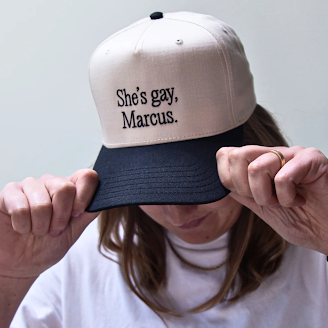
The PWHL, its fans, and its brand sponsors are all aware of how the women’s hockey league has cultivated an inviting, inclusive space for women and queer audiences, and the women’s hockey ecosystem has been intentional about what it means to these fans. This blueprint proves how sports leagues and sponsors win big when they appeal to these communities.
In 2025, the PWHL announced its Unity Games series celebrating the LGBTQIA+ community. The league developed a dedicated logo from trans artist Eli and worked with local LGBTQIA+ organizations in its markets. E.l.f., an early league sponsor and its first official beauty brand partner, was the series’ presenting sponsor.
Last April, E.l.f.’s chief integrated marketing officer Patrick O’Keefe spoke with journalist Lindsay Gibbs about the brand’s intention to engage women’s sports audiences on a “deeper level.” “We want to build a community of people that maybe are the underserved, that are not getting that support,” O’Keefe said.
- “We want to be where our community is, and we'll continue to do that and the results will continue to come in,” he added. E.l.f’s women’s sports partnerships, plus its partnerships with queer makeup influencers like Chella Man and Gottmik, walk the talk.
🏳️🌈 Express yourself

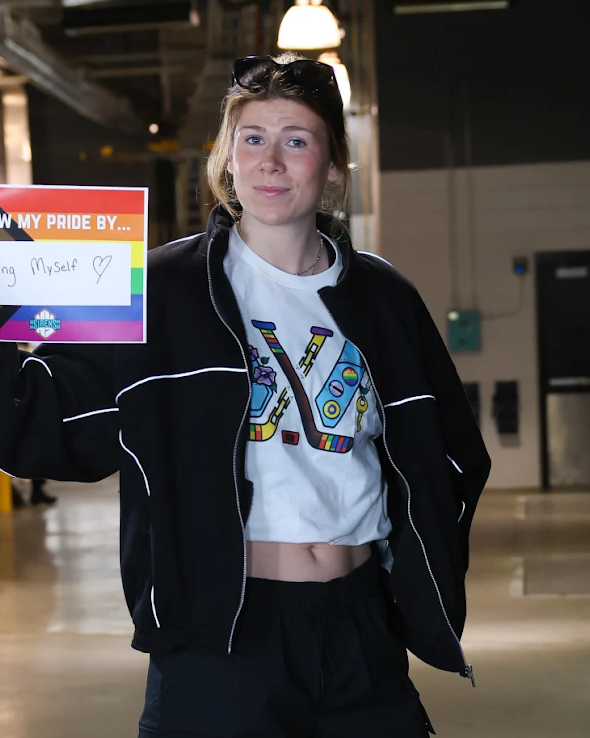
In addition to the draw of women and queer audiences, the Heated Rivalry phenomenon highlighted the power of storytelling in sports. Clearly, everyone loves a good story — that’s why so many straight women are binging Heated Rivalry.
Beyond hockey, brands in women’s sports have leaned into telling queer athletes’ stories to drive campaigns in the past. U by Kotex partnered with StudBudz to destigmatize periods, while underwear brand Woxer partnered with masculine-presenting WNBA athletes to promote their line for gender-nonconforming customers.
Historically, women’s sports fans are invested in players off the court, which is why brands hoping to reach them win big when they embrace the intersection of sports and culture. In women’s sports, fans crave content beyond the game, and that’s where showcasing off-court personalities, especially through the lens of pop culture references, can draw in new fans and customers. Here for the lore.
Enjoying this article? Want more?

Sign up for The GIST and receive the latest women's sports business news straight to your inbox three times a week